Escape from Hungnam Prison
1950: the story of a young teacher, unjustly imprisoned, and his disciples surviving Hungnam Prison.
Translated from the Korean original by AI.
Contents (19)
- Prologue
- Prisoners Being Dragged Away
- Life as a Prisoner in Hell
- Hungnam Plant
- Hunger and Death
- The Young Man
- The Teacher, No. 596
- The Prisoners' Teacher
- The Grandfather He Saw in a Dream
- The Teacher's Devotions
- The Disciple’s Disbelief
- The Secret of the Bible
- Persistent Disbelief
- The Disciple Returned
- The Woman Who Came Looking for the Teacher
- The Outbreak of War
- The Deaths of the Prisoners
- Life and Death
- Escape
01Prologue
There was once a popular American television drama called Prison Break. It told the story of a man who, overcoming every kind of hardship, succeeds in breaking his brother out of prison after he has been falsely accused and locked away.
The escape from Hungnam Prison was the Korean Prison Break of 1950.
It was a historic event set in motion by Heaven to free the Messiah, who had been falsely accused and imprisoned. Having endured a life in Hungnam Prison that was like death itself, and at last succeeded in escaping, this event is more moving than any novel or film.
02Prisoners Being Dragged Away
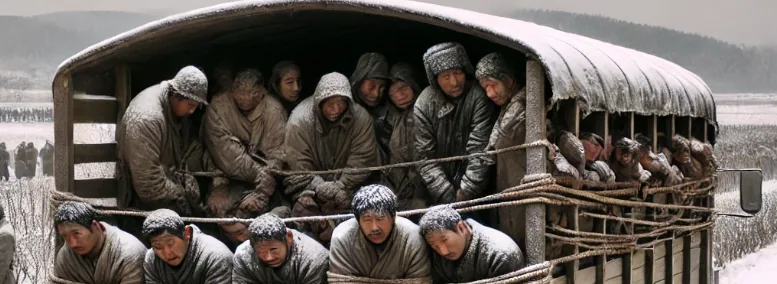
In February 1949, through a savage winter wind, a freight truck was crawling slowly over a snow-covered road. What it carried in its bed was not freight, but dozens of men who looked like a pack of beggars. In their wretched state they sat blinking, their faces emptied of any hope. Every last one had his arms bound with rope, and they were tied in pairs to the men beside them, so that no one could have run even if he tried.
After they had ridden for a long while, hunched over, cramps began to seize their legs.
"Hey, you bastard! Pull your legs in!"
"Damn it, I'm dying here too!"
Just then, from somewhere, a club came flying in and cracked down on their heads.
"Can't you shut your mouths? You think this is your own room?"
At a single word from the watchman, they fell silent, curled themselves up again, and only glared sidelong at one another.
Indifferent to their exhausted journey, the truck kept crawling on, stopping and starting, through the whole night. Only at dawn did the truck that had run all night at last come to a halt somewhere.
A guard standing before a gate laced with barbed wire exchanged a few words with the driver, then opened it. The truck passed through the gate and stopped in the middle of a broad yard.
"Get down, quick!"
Guards who had sprung out from somewhere shouted at the truck. At their orders, the prisoners got to their feet and began climbing down. After so long with their legs drawn up, their bodies were stiff, and with their arms bound by rope as well, even getting down from the truck was no easy matter. The instant they stepped off, the cold dawn air drove deep into their lungs and made the hair on their heads stand on end.
"Dress ranks, left and right!"
Amid the guards' shouts from every side, the prisoners somehow formed up in pairs in four columns. Most of them wore black rubber shoes on bare feet, and they had their bodies drawn in as tight as they could against the cold.
'Damn bastards, we're freezing to death—what's all the yelling for? Just get us inside already...'
The prisoners could think of nothing but getting indoors as quickly as possible.
'Rrrrumble!'
Just then, with a thunderous roar of its engine, the truck that had brought them there turned and drove back across the yard. As if its work were done, it vanished abruptly into the light of the rising sun. The prisoners left behind in the yard stood staring blankly after the truck as it disappeared.
03Life as a Prisoner in Hell
"Well now, look at the welcome newcomers coming in."
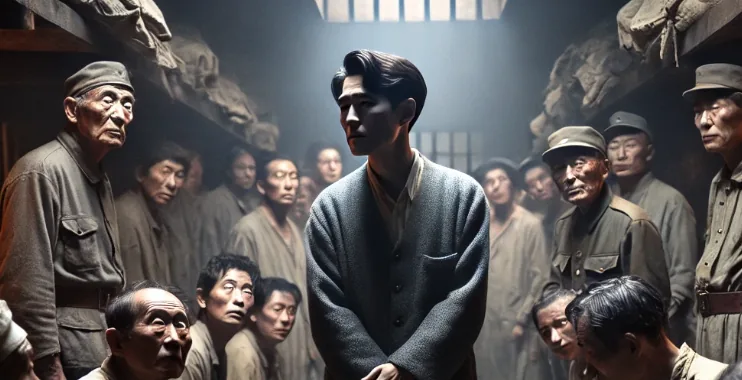
As the newcomer prisoners stepped into the room, someone spat the words out with a sneer. In the dark, stale room, a dozen or so prisoners who had been there longer sat here and there, slumped as if their bodies had gone limp.
Close-cropped heads and bloodless faces; filthy clothes that looked as if they had not been washed in ages; a dull, foul smell; unpleasant eyes in cold, expressionless faces. These were the welcoming gifts that greeted the newcomers.
Even so, the newcomers felt they ought to make some show of manners, so they gave a greeting and stood there awkwardly.
"Sit down."
At someone’s command, they all sat. So many men had been crammed into the small room that the newcomers could not even lean against the wall; they had to sit bolt upright, stiff-backed.
When the newcomers looked more closely at the old hands, they saw figures even more wretched than they had seemed at first glance. Their hands and feet were marked with unusually thick calluses, and among them were men reduced to skin and bone, in a state beyond describing.
'This really is hell itself.'
Looking at the men who had come before them, no other thought came to mind.
"No. 919!"
One of the old-timers had seen the number fastened to the newcomer’s chest and called out.
Caught off guard, No. 919 answered, "Yes."
The old-timer who had just called him clicked his tongue and tossed out a remark.
"A three-monther, then."
He had no idea what the man meant.
"What do you mean, a three-monther?"
No. 919 asked, his eyes round with confusion, and the old-timer answered.
"No. 919, from the pale, soft look of your face, I’d say you’ve never done a day of hard labor in your life. And your body doesn’t look to be in such fine shape either. So if you last three months, you’ll have lasted plenty."
"You mean I’ll last three months? Then after three months..."
"After three months?"
The old-timer turned his head and glanced at the man beside him. The man was nothing but skin and bone, breathing in harsh, labored gasps. He looked as if he might die at any moment. The old-timer turned back and said with a sneer.
"You end up like that."
No. 919 could say nothing. He only stared blankly at the corpse-like man.
Some time passed in that way, and before long it was mealtime.
'They expect me to eat this and call it food?'
The man had eaten nothing since the day before, not even that morning, but when he saw the breakfast they had given him, his mind went blank. A small fist-sized lump of beans, corn, and barley pressed together, and a bowl of soup with two or three scraps of seaweed floating in it. He simply stared at them, dumbly.
"No appetite? Then I’ll eat it."
The fellow beside him snatched it away before he knew what was happening and shoved it into his own mouth.
04Hungnam Plant
"All hands to labor!"
At 8 a.m., at the guards' shouted command, some 1,500 prisoners gathered in the middle of the exercise yard. A man who appeared to be a guard came over to the newcomers and briefly explained the work they would be doing and the precautions they were to observe.
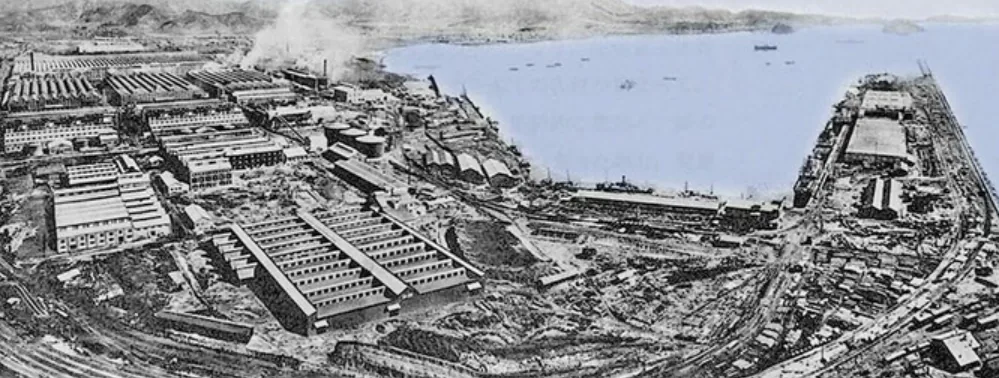
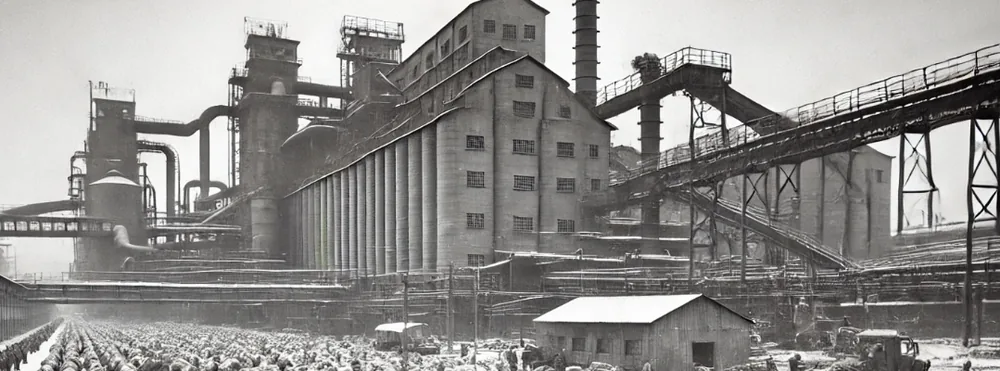
Tied together two by two with rope, the prisoners stood in four ranks, facing the main gate. Before long the gate opened, and the 1,500-odd prisoners began to march through the morning air. After they had walked about ten ri, a vast factory came into view on a broad stretch of level ground. A large signboard hung over the factory's main gate, with words written on it.
'Chosun Nitrogen Fertilizer Company, Hungnam Plant'
No. 919 stared blankly at the signboard as he walked into the factory grounds.
The factory was immense, beyond anything he had imagined, and the roar that burst from every direction filled the strangers with a first, bewildering sense of wonder. But that wonder lasted only a moment. The guards began shouting from all sides.
"Line up in front of the fertilizer!"
The prisoners formed ranks before the white fertilizer piled up like mountains. Then, with the command "Begin work!" each man started in at his assigned place.
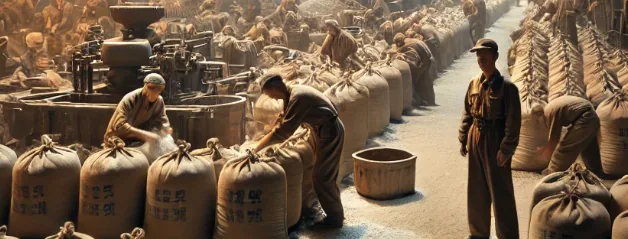
One man first stood holding open the mouth of a fertilizer sack. Then two men with shovels filled it with fertilizer. After several shovelfuls, another man standing behind them carried it to the scale. The factory weigher confirmed that it was over 40 kilograms and ordered it moved. The remaining six men took turns carrying the sacks away, tying them shut, and packing them. In this way, ten men made up a squad, and in a single day they were to move 1,300 sacks.
Those 1,300 sacks were no easy task. From 8 in the morning until 5 in the evening, except for a 30-minute lunch break, they had to keep working without rest, finishing a sack every three minutes for eight and a half hours. Whether you were shoveling or carrying, it was enough to kill a man. It was the dead of winter, yet after about an hour sweat began to pour down like rain. Because of it, sweat and fertilizer caked together on their faces and on the wrists where they had rolled up their sleeves. Their throats burned so badly they thought they would die, but the prisoners were issued only a small ration of water, so they could not drink as they pleased.
"Move it, quick!"
When No. 919 struggled, unable to tie the sack's knot properly, the squad leader shouted at him. Having never done anything of the kind, he was slower than the others. If even one man lagged behind, the entire squad would be called to account, and the eyes around him were sharp with reproach.
"This won't do. No. 919, you take the shovel."
Shoveling, too, was no easy matter for him. For a man who had never done hard labor in his life, shoveling until calluses formed on his palms was unbearably difficult. In time even his legs began to tremble.
05Hunger and Death
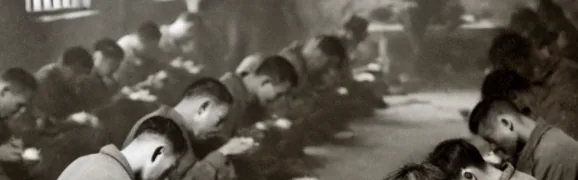
No. 919 could not even remember how he had made it back to the camp. It was as if he had walked there in a coma. After a full day of hard labor—the first in his life—he dragged his exhausted body back to the camp only after the short winter sun had already set and dusk had come down.
He was so tired, his whole body aching and numb, that he wanted nothing more than to sleep, but there was nothing to do except sit there, staring into the drained eyes of the men around him.
Without thinking, No. 919 found himself looking at the old-timer who had been wheezing harshly since morning. Reduced to skin and bone, like a skeleton, the man leaned against the wall with his head bowed, breathing in ragged gasps as though all strength had gone out of him. However one looked at him, he was sick. If he was not taken to a hospital at once, it seemed plain he would not last days, let alone months.
'They make a man like that do hard labor too?'
For a moment pity rose in him, but he soon turned his head away.
Every stomach in the room was growling loudly with hunger. After a while the food came. It was far too little rice to fill that hunger, but they had to eat it for the sake of tomorrow. There was so little that it did not take even five minutes to finish. Just then, one of the men leaning against the wall suddenly toppled sideways.
"Hey, you bastard! Get up!"
The men around him shook him, but he did not get up. He lay there without breathing, a rice ball clutched tight in each fist.
'So that’s how he goes in the end…'
No. 919 realized he was the same skeletal old-timer he had noticed a little while before.
He was watching the man die like that and was about to turn his head away when it happened. The men beside the one who had just collapsed were prying open the dead man’s hands.
They pulled out the rice balls the dead man had been holding and shoved them into their own mouths. Another fellow even forced open the dead man’s mouth, stuck his fingers inside, and scraped out the grains of rice.
The newcomers stared at the scene, stupefied.
The old-timers showed no particular reaction. Their faces were blank, as though this were nothing new.
One old-timer shouted.
"Enough. Clear out the corpse."
06The Young Man
"You—tomorrow, let’s not end up on the same squad."
For men like No. 919, who could not keep up with the work, it was the sort of joke commonly heard after the day’s labor was done. A joke, yes—but sure enough, the next day the men who had worked with him the day before all avoided him.
Though it had already been half a month since he arrived at the camp, his hands were still slow.
That day, too, he was wrestling with a sack of fertilizer.
"Let me show you."
A sturdy young man from the same squad came over and, with practiced hands, tied the knot in the sack for him. No. 919 earnestly followed along as the young man taught him.
"See? It works, doesn’t it?"
"It does. Thank you."
The young man looked to be in his late twenties, and he worked so well that the others around him could only shake their heads in amazement. Anyone else would have mocked a man so useless at the labor, yet this one had come over to help him. No. 919 decided he must find a way to thank him again.
When lunchtime came, he ate his meal and went to sit beside the young man.
"I truly thank you."
No. 919 did not know how to express his gratitude. More than anything, he was glad to have met someone in a place like this who could help him. As if he understood what was in his heart, the young man answered with a smile.
"You don’t seem to have been here long. How did you come all the way to this place?"
"Truth is, I was an officer in the People’s Army. But one of my men did something crooked, and I was held responsible along with him…"
"Ah, I see. It must be hard, being in new surroundings. Still, I have a little more experience here, so I’ll show you what I can."
'Could there be anyone more kind?'
No. 919 felt as if tears of gratitude might come. In a hellish place like this, to have a complete stranger treat him with such kindness—he was overjoyed, as if he had met a brother dear to him. Even in the midst of work, he kept stealing glances at the young man. Though his body was gaunt from hunger, No. 919 sensed in him a bearing more dignified than that of any other prisoner, and some indefinable majesty.
The next morning, hoping to be placed in the same squad as the young man from the day before, No. 919 came out early to the yard and searched for him. It was not easy to find yesterday’s young man among the prisoners pouring out. With all their heads shaved close and all of them wearing the same clothes, he could hardly tell one from another. As he looked this way and that, a prisoner number came into view in the distance.
'No. 596'
It was the young man from yesterday. No. 919 slipped quickly over and sat down behind him.
07The Teacher, No. 596
That morning, No. 919 felt more hopeful than he had at any other time. To have his hands bound and be walking alongside No. 596 pleased him more than he could say.
'People sure are fickle. Till yesterday morning, every step was heavy as lead, but this morning my feet feel light—maybe because I’m thinking prison life might even be enjoyable if I’m with this man.'
As he turned such thoughts over by himself, they arrived at the factory before he knew it.
The young man worked with astonishing diligence. No. 919 found it a little strange.
'Everybody else works because they’re forced to, but this man looks as if he actually enjoys it.'
After each hour of work, there was a fifteen-minute rest. At the sound announcing the break, everyone flung down his shovel and collapsed on the heaps of fertilizer. But No. 596 kept working. He seemed absorbed in his labor, as though nothing around him reached his ears.
No. 919 went over to him.
"Uh… it’s break time."
At No. 919’s words, he gave a smile.
"So it is. I did not hear."
Saying this, he found a place and sat down. No. 919 sat beside him as well.
Just then, someone approached them. No. 919 looked at his number and realized he was a prisoner from the same room as the young No. 596. His prison number was No. 595.
He addressed No. 596, saying, "Teacher."
In that instant, No. 919 stared at him in surprise.
'Teacher?'
The man looked older, if anything, yet he had come up to this young prisoner and called him Teacher; inwardly, No. 919 could not help being startled.
"Good, you came. Please greet this gentleman."
At No. 596’s words, he stepped toward No. 919 and introduced himself in a low voice.
"How do you do. My name is Kim Won-deok."
Flustered by the sudden turn of events, No. 919 returned the greeting with a bewildered look.
"Ah… yes… I’m Park Jeong-hwa."
08The Prisoners' Teacher
'That young man is the Teacher?'
In the mind of No. 919, Park Jeong-hwa, the question kept turning over and over: why had No. 595, Kim Won-deok, called that young man by such a name?
'I did think he was no ordinary young man, but surely he wasn't that man's schoolteacher…'
Park Jeong-hwa could not contain his curiosity. As soon as lunch was over, he went looking for Kim Won-deok.
"It seems you were looking for me."
"Yes. There's something I'm curious about."
"Yes, go ahead."
"This morning, you called that young man, No. 596, the Teacher…"
"So that's what you were wondering about."
Kim Won-deok glanced around once, then went on.
"Mr. Park, you're a Christian, aren't you?"
"Yes, but how did you…"
"The Teacher did not come here because he was guilty of any crime. He was carrying out missionary work in Pyongyang, and after suffering persecution from the powers around him, he ended up here."
"Then you're saying he's a pastor?"
"We simply call him the Teacher."
"We? Then who else…"
"There are quite a few disciples in this camp who follow the Teacher's will."
"Ah, is that so?"
"I hope you too will become a disciple who follows the Teacher's will, Mr. Park."
"The Teacher's will? What do you mean?"
"I will explain that to you gradually, another time. For now, this matter must remain a secret from the others. You understand?"
Kim Won-deok urged him again and again, then started to rise from his place. Just then Park Jeong-hwa asked another question.
"But just one thing."
"Yes, go ahead."
"The thing is, I don't actually know the name of this man you call the Teacher…"
"You mean to say you still don't know his name?"
"Ah, yes. I was so out of my wits that I…"
"The Teacher's name is Moon Yong-myeong."
Kim Won-deok enunciated the Teacher's name clearly, then turned his back and walked away.
Park Jeong-hwa mouthed the Teacher's name once more.
'Moon Yong-myeong'
09The Grandfather He Saw in a Dream
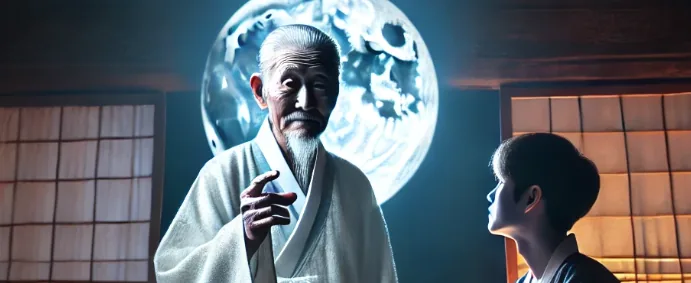
Deep in the night, when everyone lay asleep, a shaft of moonlight slipped into the room from somewhere.
Soon the light fell across Park Jeong-hwa's face, and suddenly someone was shaking him awake.
"Jeong-hwa! Jeong-hwa!"
At the sound calling him, Park Jeong-hwa lifted his head.
With the moonlight at his back, a man stood hunched over, looking down at him.
"No... Grandfather? How in the world did you get here..."
His grandfather, who had died more than ten years before, had come back alive! He was so astonished he could not close his mouth.
"Jeong-hwa, do you know what kind of man the Teacher is?"
"If you mean the Teacher..."
"Aye, that young Teacher."
"Well. I can't rightly say."
"Listen carefully to what the Teacher tells you, you hear?"
"But... what do you mean by that..."
"In any case, you can live only if you follow the Teacher's words. Remember that."
His grandfather finished saying what he had come to say, then faded away into the moonlight.
"Grandfather! Grandfather!"
Park Jeong-hwa shouted after his departing grandfather until his throat felt ready to burst. Shouting like that, he woke from sleep.
'It was a dream.'
It was still the black hour before dawn. The words his grandfather had spoken in the dream came back to him.
'Follow that young Teacher?'
He shook his head from side to side and muttered, 'Just a nonsense dream, I reckon...' Then he closed his eyes again.
What Kim Won-deok had told him the other day was one thing, and the dream from the night before was another; either way, Park Jeong-hwa felt uneasy about going up to young Mr. Moon's side as he normally did. So he kept loitering at a distance.
Young Mr. Moon, who had been watching Park Jeong-hwa from afar, came striding straight toward him.
"Did you have some kind of dream last night?"
At young Mr. Moon's sudden words, Park Jeong-hwa could not help being startled.
'How on earth does this man know what I dreamed?'
Inside he thought, 'Is this man some kind of ghost?' and trembled with fear. Weak-nerved by nature, he abruptly flung himself flat before young Mr. Moon.
"Teacher, no matter how I look at it, you don't seem like an ordinary man."
"No, why are you doing this? Please get up."
When young Mr. Moon tried to raise him, he spread himself flat on the ground like a frog and would not get up.
"Teacher, the way disciples follow you even inside the prison, and then last night my grandfather coming and telling me to follow you... Please take me on as your disciple."
"Ha ha. You mean you wish to become my disciple?"
"Yes, I do."
"It will not be easy."
Flustered by those words, Park Jeong-hwa looked into the Teacher's face for a moment, then bowed down again and said,
"I'll work hard."
10The Teacher's Devotions
"So you were a People's Army officer, were you."
The chief warden said it to Park Jeong-hwa as he looked over the prisoners' personal records.
"The head trusty is finishing his term and getting out next week. From now on, you'll take over as head trusty."
Bewildered by the sudden order to serve as head trusty, Park Jeong-hwa went straight to the Teacher.
"Teacher, they tell me I'm to be head trusty from now on."
"Is that so? That's good. Do your best at it."
After taking on the post of head trusty, Park Jeong-hwa no longer had to perform hard labor. He only had to check that the prisoners were doing their work properly. Because he had a measure of authority over the prisoners, he could pull men away and assign them to easier tasks. Hoping to spare the Teacher from the hardest labor, he said, "Teacher, you should stop doing the heavy work. I'll give orders so you can do something easier, so please do that." But each time, the Teacher flatly refused. Park had no choice but to watch as the Teacher went on doing the grueling labor.
It was night.
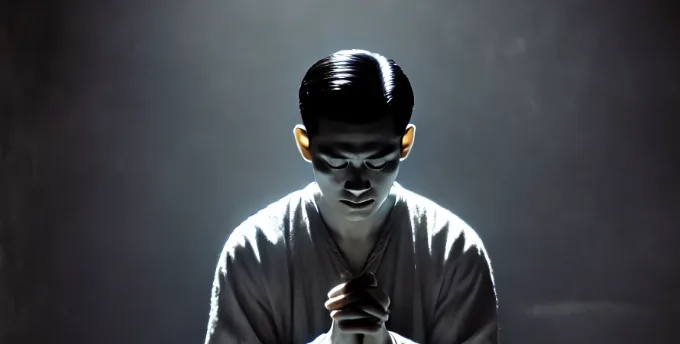
In the darkness, while everyone slept, someone sat alone in formal posture, offering prayer.
In the still and desolate prison, the sound of his prayer could be heard like a faint whisper.
Though his voice was small, within his breast it was a cry of yearning as loud as a shout.
"I will accomplish the will of Heaven!"
"God, without fail, I will accomplish Your will!"
"God, God, God…."
Kim Won-deok, who had been sleeping beside him, half woke and saw the Teacher praying.
'The Teacher is still praying…'
Worn out with fatigue, he soon closed his eyes again.
Morning came. When Kim Won-deok opened his eyes, the Teacher was already seated in his place.
'Does the Teacher never sleep?'
Though Kim Won-deok saw the Teacher like this time and again, it never ceased to amaze and mystify him.
In truth, no one in the labor camp had ever seen the Teacher asleep. That was because the Teacher went to sleep last and rose first. And at dawn, before anyone else was awake, he never failed to give himself a cold-water rubdown. He would set aside a little of his meager water ration, wet a towel with it, and wash his whole body. Many prisoners did not thoroughly wash the fertilizer from their skin and suffered from all manner of skin diseases, but through habits like this the Teacher was able to maintain his health. This upright, disciplined way of life was why the prisoners could not help but serve him as the Teacher.
11The Disciple’s Disbelief
"Jeong-hwa."
At the Teacher’s call, the disciple answered in a low voice.
"Yes."
Though the Teacher was a young man of twenty-nine, younger than his disciple, there was a depth hidden in his voice that seemed to transcend his years.
"Today I shall tell you, Jeong-hwa, an important secret of the Bible."
At the Teacher’s words, the disciple’s eyes flashed open.
"Do you know what sort of person John the Baptist was?"
John the Baptist was Jesus’ cousin, a man who had come with the mission of preparing the way for the Messiah who was to come. He lived a life of hardship in the wilderness, crying out to the people of Israel, ‘Repent,’ and he baptized many. That was how he came to be called John the Baptist. To the Israelites of that time, John the Baptist was the greatest of prophets, and many people were moved by his words and followed him. Park Jeong-hwa knew, too, that many Christians today praised John the Baptist as the greatest man after Jesus.
"Wasn’t he a great prophet?"
At the disciple’s words, an inscrutable smile touched the Teacher’s lips, and he continued speaking.
"Listen carefully to what I am about to say. As you know, Jeong-hwa, John the Baptist was indeed born with the mission of coming beforehand to prepare the way the Messiah would go. It is true that he recognized the Messiah and bore witness to him, but when it came down to it, he failed to attend Jesus, who was the Messiah. That was because he did not know that Jesus was truly the Messiah. If you look at the fact that, from prison, he asked Jesus, ‘Are you the Messiah who is to come, or should we wait for another?’ you can see that he did not know Jesus as the Messiah. Had he served and followed Jesus, he would not have died so wretchedly in prison. He was a failed prophet who did not fulfill his responsibility."
The moment he heard these words, the disciple’s heart began to heave. What the young Teacher said was utterly different from everything he had known until now, and hearing it from the mouth of the very man he revered and wished to follow sat uneasily with him.
"Teacher, that sounds a bit strange. As far as I know, John the Baptist was a great man..."
"In Matthew 11:11, Jesus said that among those born on earth there had been none greater than John the Baptist, but that even the least in the kingdom of heaven was greater than he. These were Jesus’ words rebuking John the Baptist for his disbelief."
Faced with the Teacher’s logical words, Park Jeong-hwa could offer no rebuttal. Yet he could not immediately change the convictions he had held until then.
"Teacher, I’ve heard you out, but I find it hard to believe those words."
For a while, a silence of utmost seriousness flowed between the two men. Then the Teacher spoke words of deep import to his disciple.
"Jeong-hwa, you must believe what I tell you."
But Park Jeong-hwa was a stubborn man. To the end, he would not bend his thinking.
12The Secret of the Bible

It was that night. Park Jeong-hwa met his grandfather once again.
"Jeong-hwa, why will you not follow the Teacher’s words?"
"Granddad, but what he says is more than I can understand…"
"You wretch! Are you truly bent on dying?"
Startled by his grandfather’s fury, Park Jeong-hwa’s eyes flew open in the dark.
"Did you have another dream last night?"
When the Teacher again spoke of his dream, Park Jeong-hwa could no longer help surrendering.
"Teacher, yesterday I was in the wrong. From now on, if it is your word, I’ll follow it without question."
"Is that so? Then today I will tell you another secret."
"Today it is the story of Mary, the mother of Jesus."
"Surely you don’t mean Mary failed in her responsibility too?"
"Listen carefully."
Once again the Teacher began to speak.
"As you know, many Christians call Mary the Holy Mother and revere her. That is because Mary was the mother who bore the Messiah, and because she had the achievement of conceiving Jesus at the risk of her life."
Park Jeong-hwa listened with an expression that showed he accepted the Teacher’s words.
"But Mary was not able to serve the grown Jesus as the Messiah. In other words, Mary did not fulfill her own responsibility."
Park Jeong-hwa, who had been listening quietly, felt his face twist all at once. Again confusion rose in his heart. Any Christian regarded Mary, the mother of Jesus, as sacred. To him, who had held such a faith, the statement that Mary had failed in her responsibility was a bolt from the blue. Park Jeong-hwa had lived with a stubborn faith, and now his mind was in utter disorder, as though a skein of thread had been pulled apart inside it.
'I truly cannot believe this.'
Once more, doubt toward the Teacher began to stir in his heart.
"Teacher, I cannot accept those words."
"You are doubting again. You must not do that."
"Even so, Teacher, this time I simply cannot…"
Leaving the Teacher behind, Park Jeong-hwa returned, and that night sleep did not come easily.
'Will Granddad come into my dream again tonight and scold me? What he said today truly makes no sense…'
His grandfather’s figure appeared once more. Tonight, for some reason, his grandfather’s face looked terribly fierce.
"After all this old grandfather has told you, are you truly going to doubt the Teacher’s words?"
"Granddad, but to blaspheme the Holy Mother Mary is…"
"There is no help for you, then."
Suddenly his grandfather’s eyes turned red, and with both hands he seized Park Jeong-hwa by the throat and began to press down.
"Granddad, why are you doing this? I can’t breathe…"
He thrashed and struggled, but his grandfather did not budge; he only kept pressing down on his grandson’s throat.
"Even now, will you not listen to this old grandfather of yours?"
"Granddad, I’ll listen, I’ll listen."
When he opened his eyes, Park Jeong-hwa’s whole body was drenched in sweat. He felt his own throat, let out a sigh of relief, and wiped the sweat from his forehead.
13Persistent Disbelief
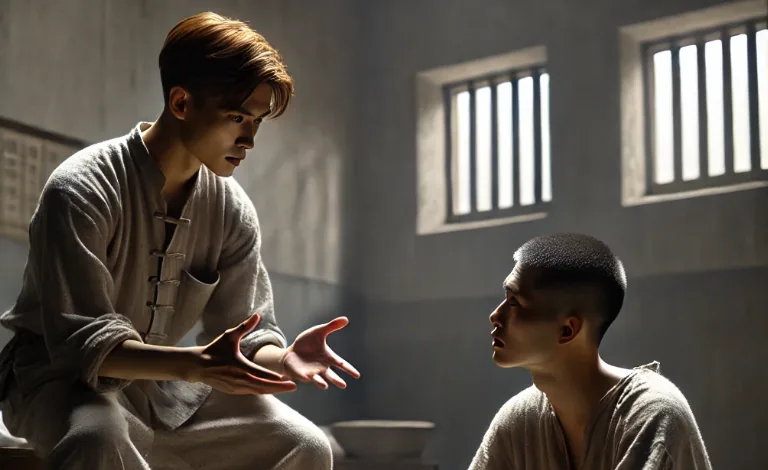
When the two days of nightmare had ended, Park Jeong-hwa resolved that now, truly, he would accept whatever the Teacher said.
"Teacher, in my dream last night…"
As Park Jeong-hwa began to tell him about the dream, the Teacher, as if he already knew, asked before his disciple could finish.
"So, will you truly believe what I tell you now?"
"Yes. I won’t doubt a word you say."
"Is that so? What I am about to tell you will not be easy to accept."
"No, sir. I’ll believe it, so please tell me."
Once again the hour of solemn instruction began. The disciple listened with his ears pricked, his face grave.
"Today I will speak about Jesus. Many Christians think that through his death Jesus forgave humanity’s sins. Believing that the blood of Jesus has washed away their sins, they hang high the cross, the very instrument on which he died, and pray before it.
If so, does that mean Jesus came to this earth in order to die? In the Bible, Jesus told people to believe in him; he did not tell them to kill him. Jesus died because the Jewish people of that time failed to believe in him and put him to death, not because he had come in order to die. Even when we see how, after Jesus’ death, his disciples fiercely rebuked the Jewish people for seizing and killing him, we can know that Jesus did not come for the purpose of dying. The purpose of Jesus’ coming to this earth was to have people believe in him as the Messiah, and then to establish God’s world centered on the Messiah. But because of the disbelief of the Jewish people, Jesus departed without fulfilling that Will. Therefore, in order to fulfill that Will, the Lord of the Second Advent must come again. In other words, Jesus did not fulfill all the responsibility of the Messiah."
Once again, the thing that had to come had come. Park Jeong-hwa’s face twisted, then went pale blue.
Inside, he was boiling.
'What kind of talk is this? Jesus, the King of kings, God’s only begotten Son, the Savior of this world—no title you could heap on him would ever be enough—and now you say he failed to fulfill his responsibility? I could bear the insult to John the Baptist, and I could bear the insult to Mary, but I cannot, absolutely cannot, bear an insult to Jesus.'
Overcome with anger, Park Jeong-hwa burst out shouting.
"Teacher, what kind of monstrous nonsense is this?"
The Teacher, having seen this attitude in his disciple time and again, answered calmly this time as well.
"You still have many doubts. Go back and pray about it."
No matter how Park Jeong-hwa turned it over in his mind, he could not understand it. Everything the Teacher said was utterly different from all the common sense he had known until now. Was he supposed to accept this? Park Jeong-hwa’s thoughts began to snarl once more.
Meanwhile, worry began to rise in him over what his grandfather might come and say to him again tonight.
'No matter how Grandfather threatens me, there is no way I can listen to talk like that and follow it. Tonight I’ll have to settle this, life or death.'
14The Disciple Returned
"Granddad, why does your face look like that today?"
Park Jeong-hwa was startled when he saw his grandfather. The old man looked nothing like himself, but terribly drawn and haggard. There was not a trace of color in his face, and his eyes seemed slack, drained of strength.
"Jeong-hwa, I suppose I have to give up on you now."
At his grandfather's feeble words, as if all the life had gone out of him, Park Jeong-hwa was even more alarmed and asked,
"What? What do you mean by that?"
"I told you and told you, and still you can't give up that damned stubbornness of yours."
"But when I hear words that insult Jesus, how can I…"
"Jeong-hwa, who do you think he is?"
"At first I thought he was a fine teacher. But now I don't rightly know."
"Listen carefully. He is the one sent by Heaven."
"The one sent by Heaven?"
"Yes. Whatever he says, you must follow him absolutely. Only then will you be able to leave this place alive. But with you so hard-headed, this old man has no strength left anymore."
The gaunt old man slowly turned his back and went away.
"Granddad! Granddad!"
He called after his grandfather until his throat felt as if it would burst.
Because of the dream he had had the night before, Park Jeong-hwa could not put his mind to his work all day. The image of his gaunt grandfather would not leave his thoughts.
'If I betray that Teacher, could it really be that I'll die here?'
Fear and dread came surging in.
'If he truly is the one sent by Heaven, then if I only believe in him and follow him, I may be able to live. Grandfather must have spoken to me so strongly, three times now, in order to save me.'
Once he thought this, his mind became considerably clearer. He resolved that from now on he truly would believe the Teacher's words absolutely.
"Well, did you try praying?"
The Teacher asked his disciple, who wore an embarrassed look, with a smile.
"The truth is, yesterday Granddad came to me again…"
"Your grandfather is your grandfather, but isn't what you yourself think the important thing?"
"Of course it is, but what Granddad said is one thing, and it's what I think too… From now on, I will believe the Teacher's words absolutely."
"Hmm… is that so? Then from now on I suppose I'll have to tell you things even more shocking."
The Teacher said this and laughed heartily. At his words, the disciple scratched his head with an abashed look.
15The Woman Who Came Looking for the Teacher
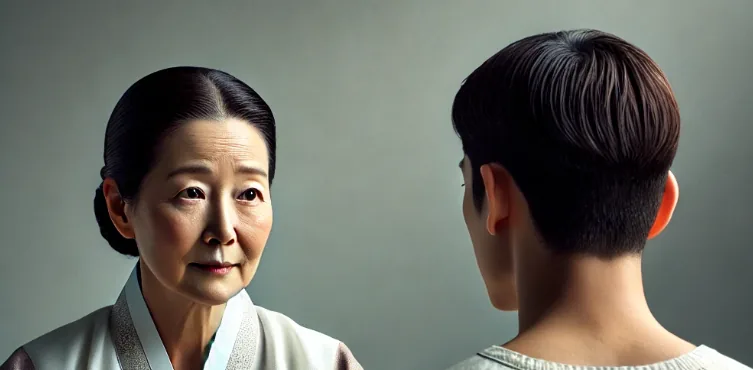
It was a spring day in 1950. A middle-aged woman in a white jeogori jacket was walking toward Hungnam Prison. In one hand she carried a bundle; in the other she clutched a handkerchief, and she did not stop to rest. When she reached the prison, she went straight into the prisoners’ visiting room.
She looked at the young Teacher with pitying eyes, as if he were her own son. Before she knew it, tears had gathered in her eyes.
"Teacher, how is your health?"
At the woman’s tear-choked words, the young man answered quietly.
"Don’t cry. I am all right."
Though he was a pitiful sight in his prison uniform, the Teacher’s eyes burned with an intense light.
"Tell the church members to steady their hearts and not lose their faith. Before long, something of tremendous importance in Providence will happen."
At the Teacher’s words, the woman asked in surprise.
"Something important in Providence?"
"Yes. Tell them only not to die, but to keep their faith. Before long, I will be leaving this place."
"What? But, Teacher, you still have three years left on your sentence…"
"Listen carefully to what I say. The time is drawing near. God will send me out from this place. So be sure to keep well what I have told you."
"Yes, I understand."
She answered and handed the bundle to the Teacher.
"These are rice cakes and misutgaru. Don’t give them to anyone else. Hide them away and eat them yourself."
The Teacher nodded several times, took up the bundle, and rose. As the woman watched him turn away, her eyes suddenly fell on his trousers. They were so threadbare, with holes worn here and there, that tears surged up in her. She pressed her handkerchief against the sobs spilling from her and watched the Teacher until he disappeared from sight.
As soon as the Teacher returned to the cell, he opened the bundle he had brought.
"Today we’ll have a feast!"
The twenty or so men who shared the cell with him crowded in and divided up the food from the bundle.
"Teacher, you’re not having any?"
"I’m all right. You men eat your fill."
16The Outbreak of War
By May, a strange rumor was going around the camp. War, people said, would soon break out.
"They say the ships that haul fertilizer off toward the Soviet side come back loaded to the gunwales with howitzers."
One of the guards whispered the secret information to the head trusty. Instinctively, the head trusty sensed that war was about to begin.
By June, the atmosphere had grown still more ominous, and even inside the camp the watch began to tighten.
It was June 25, 1950.
"Teacher. They say the war’s started."
The head trusty, having heard the news of the war, ran to the Teacher and told him. At dawn that day, with the crack of gunfire, the war had begun at last.
"Yes. What was to come has come."
The Teacher seemed already to have known about this war.
Growing anxious, his disciples drew close and asked him, as if hoping to learn the future through him.
"Teacher, how’s this war going to turn out?"
"Stay calm. Whether we live or die is all Heaven’s will. Finish the work you were doing."
At the Teacher’s words, the disciples returned to their places.
The course of the war was turning against South Korea. Once the war began, it took only three days for Seoul, the capital of the South, to fall to the North Korean People’s Army. Outmatched in military strength, the South Korean army was retreating southward after the fall of the capital.
Before anyone quite realized it, North and South had been locked in fierce attack and counterattack for more than a month.
Then, on August 1, 1950, with the war at its height.
It was noon. All at once a shrill emergency siren began to wail. A guard came running across the factory grounds.
"Air raid!"
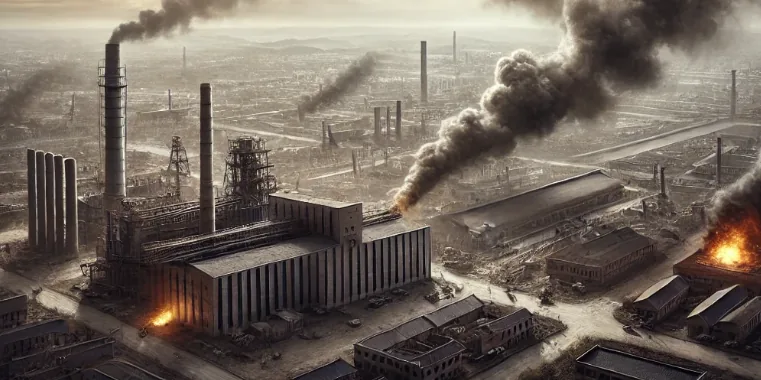
No sooner had the cry fallen than a bomb burst with a thunderous boom. It exploded in the very middle of a crowd of men at work, and the scene turned at once into a living hell of screams and blood. Hundreds of bodies lay strewn about, and groans rose from every side.
Again an airplane passed overhead with a whining roar and dropped its bombs. Here and there, everywhere, bodies with arms and legs blown away kept rolling across the ground.
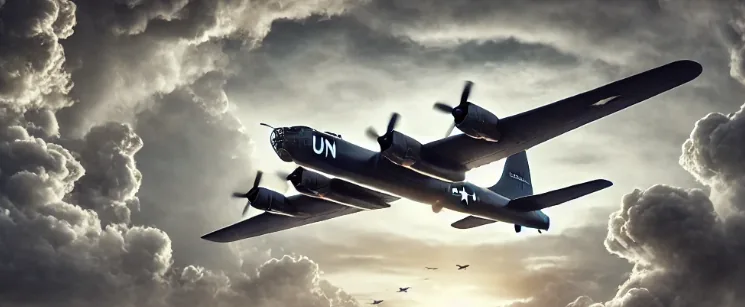
That day, dozens of UN bombers rained bombs on the fertilizer plant for a full four hours, and thousands died.
"Teacher, are you all right?"
The disciples who had barely managed to escape back to the camp ran to the Teacher. But the Teacher stood as composed as ever, as if nothing had happened. And he said to them the same words as before.
"Stay calm. Whether we live or die is all Heaven’s will."
17The Deaths of the Prisoners
"Chief, what if they start attacking the camp too?"
On the day of the air raid, the chief warden and several administrators gathered in the office to discuss what measures to take.
"They won’t attack the camp, so you can breathe easy for now."
"How do you know that?"
"There’s something called the Geneva Convention, or whatever it is. They say places like prison camps don’t get attacked."
"Is that so? Well, be that as it may, what are we supposed to do now? With the plant in that state…"
"For now we watch how things go. But that doesn’t mean we can sit on our hands, does it?"
Beginning the next day, the work of restoring the plant got under way. Clearing away the bodies strewn here and there was a major task in itself. More than 4,000 plant employees had been killed, and some seventy prisoners from the camp lay dead as well.
"Teacher, I will be leaving before you."
On August 2, the day after the air raid, the head trusty Park Jeong-hwa completed his sentence and was released.
"Yes. When you get out, go to Pyongyang and meet the church members. And tell them I am well."
"Yes, I understand."
The disciple could hardly bring himself to take a step away. He kept looking back and waving to the Teacher. He did this several times, then vanished into the distance.
"Before long, we too will go out that way."
At the Teacher’s words, the disciples only looked at one another’s faces.
By mid-August, North Korea had occupied the entire country except for Busan. It seemed that North Korea’s complete victory would come at any moment. By September, North Korea was preparing to raise the cup of triumph. But on September 15, the UN’s Incheon Landing began. For North Korea, which had launched an all-out assault down to the southern tip of the Korean Peninsula, the Incheon Landing struck precisely where it was least expected.
"Chief, we’ve got trouble. They say the UN forces are right on our doorstep."
By October, the UN forces had advanced to the vicinity of the camp. The camp officials, beside themselves with anxiety, rushed to the chief warden, each shouting his piece.
"Chief, at this rate we’re all dead. Let’s abandon this place and get out fast."
"That’s right. We’ve got to run."
The chief warden opened his heavy mouth and spoke to them.
"All right, let’s say we run, like you’re telling me. But what do we do about the prisoners?"
"Well, couldn’t we just let them out, or leave them behind?"
"You think it’s that easy?"
The officials looked as if they did not understand what he meant.
"If we’re running and those bastards catch sight of us, you think they’ll just let us be?"
Hearing it put that way, they saw the point. After all the brutal mistreatment those men had suffered, if they happened to see the guards outside, they would surely take revenge.
"Then what are we supposed to do?"
"What do you think? We kill them all before we go."
The next day, hundreds of prisoners whose names had been called were tied to one another with ropes and dragged off somewhere.
The guards armed themselves with rifles and led them deep into the mountains.
They had been climbing for about an hour.
One guard stopped, pointed at the ground, and shouted.
"Here!"
The guards ordered the prisoners to dig with shovels. Not knowing why, the prisoners began to dig.
They had been digging for roughly two hours.
"Bang bang bang."
Bullets rained down on the prisoners as they dug. Those who were hit by gunfire crumpled one after another. The pit they had dug became their own grave.
18Life and Death
"They say the men dragged off to work yesterday never came back."
In no time, the rumor began to race through the camp.
"What if they killed them all?"
The prisoners’ eyes were stark with fear.
As they had the day before, the guards called out the numbers of the prisoners to be sent into the mountains for work.
"Teacher, they called my number too."
They had called even No. 595, Kim Won-deok, the number just before the Teacher’s.
Kim Won-deok could not shake the feeling that this would be his last farewell. So, unlike other times, he bowed to the Teacher with a little more formality before turning away.
"Won-deok."
At the Teacher’s call, he turned his head.
The Teacher’s expression was grave. For a while he looked at his disciple with eyes that seemed to want to say something.
"Go, and return safely."
"Yes."
The disciple gave his answer and turned away, and tears gathered in his eyes.
The prisoners were assembled at the same place as the day before. In a great, deeply dug pit lay the bodies of the prisoners who had been brought up yesterday.
"Cover the pit with dirt!"
At the guard’s barked order, the prisoners shoveled earth over the corpses.
Whether or not they knew that they too would die in that very place, they only moved the dirt with listless hands.
Kim Won-deok sensed that only a few minutes of his life remained, and he prayed with a heart prepared for death. At last, when the bodies had been covered with earth, the rifles of the People’s Army opened fire on the prisoners without exception.
Over the dirt that had covered the dead, the bodies of more prisoners piled up once again.
After firing for a long while, the guards slung their rifles over their shoulders and trudged down the mountain as if they had done the work they came to do.
Some time after the guards had all gone down, crows circled above the pit, crying caw, caw.
It was then.
Kim Won-deok, who had been lying there like a corpse, suddenly opened his eyes.
'I’m alive!'
Kim Won-deok realized he was still alive. But he could not move. His whole body was bound with rope, and other corpses were pressing down on him.
'I have to cut the rope!'
He looked around him.
'Yes. That’s it, right there.'
He spotted a corpse wearing glasses. He stretched out his hand and took the glasses from the dead man, then gripped a stone and smashed the lenses. Carefully holding a shard of broken glass, he began to saw gently at the rope binding his arms. After about 30 minutes of struggling, the rope came loose.
He stood and examined his body. He was not hurt anywhere. Some 300 prisoners had died, and by a stroke of sheer mercy he had survived.
'Thank you, God.'
In his heart he gave thanks to Heaven, then went down the mountain and began to run.
19Escape
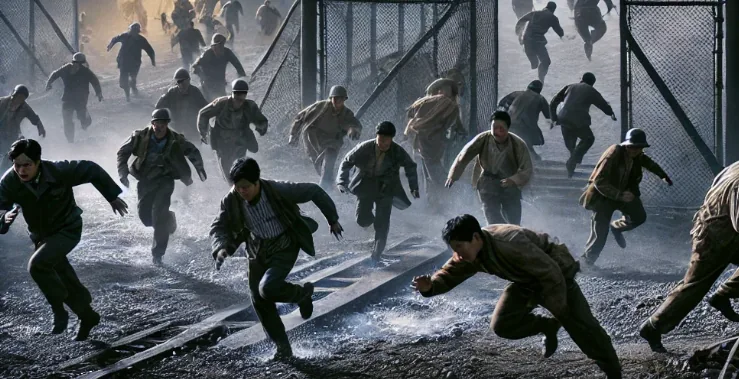
That night, the Teacher gathered his disciples and gave his instructions.
"The time has come for us to leave this place. At daybreak, we escape."
"Teacher, with the gate locked up like that, how are we supposed to get out?"
"For now, keep my words in mind and wait."
The disciples vowed to obey the Teacher’s command, then went to their places and made ready for the escape.
At last, daybreak came.
'Boom.'
From somewhere came the sound of a bomb exploding.
"Air raid!"
Along with the shriek of sirens came the guards’ shouts announcing the attack. The prisoners, beside themselves with terror, screamed as they fought to flee in every direction.
The Teacher’s disciples, too, were thrown into confusion and did not know what to do.
"Stay calm. Keep close to my side. You must not, under any circumstances, stray far from me."
After pressing this upon his disciples again and again, the Teacher took the lead.
Thousands of prisoners burst outside like water draining through a breached dike. To a man, they ran for the main gate.
The Teacher’s disciples were about to run that way as well. Then the Teacher cried out,
"Do not go that way. Follow me!"
The Teacher ran in the opposite direction from the crowd. Hearing his words, the disciples followed after him and ran the other way. But some simply cut across the yard toward the main gate.
It was then. A UN bomber passed overhead and dropped a bomb into the middle of the yard.
'Boom.'
The bomb fell squarely amid the surging mass. In an instant, hundreds of bodies were flung to the ground. The survivors wailed in the pitch-black darkness, staggering this way and that, not knowing where to go.
Even in such a scene, the Teacher ran on calmly at the front. His disciples ran after him. The Teacher’s group made for the rear of the camp. The back wall had already been struck by a bomb and had collapsed. They climbed over the fallen wall and began to run with all their might.
How long had they been running?
The sound of exploding bombs now came faintly from behind them.
Before they knew it, the sun was rising beyond the distant mountains.